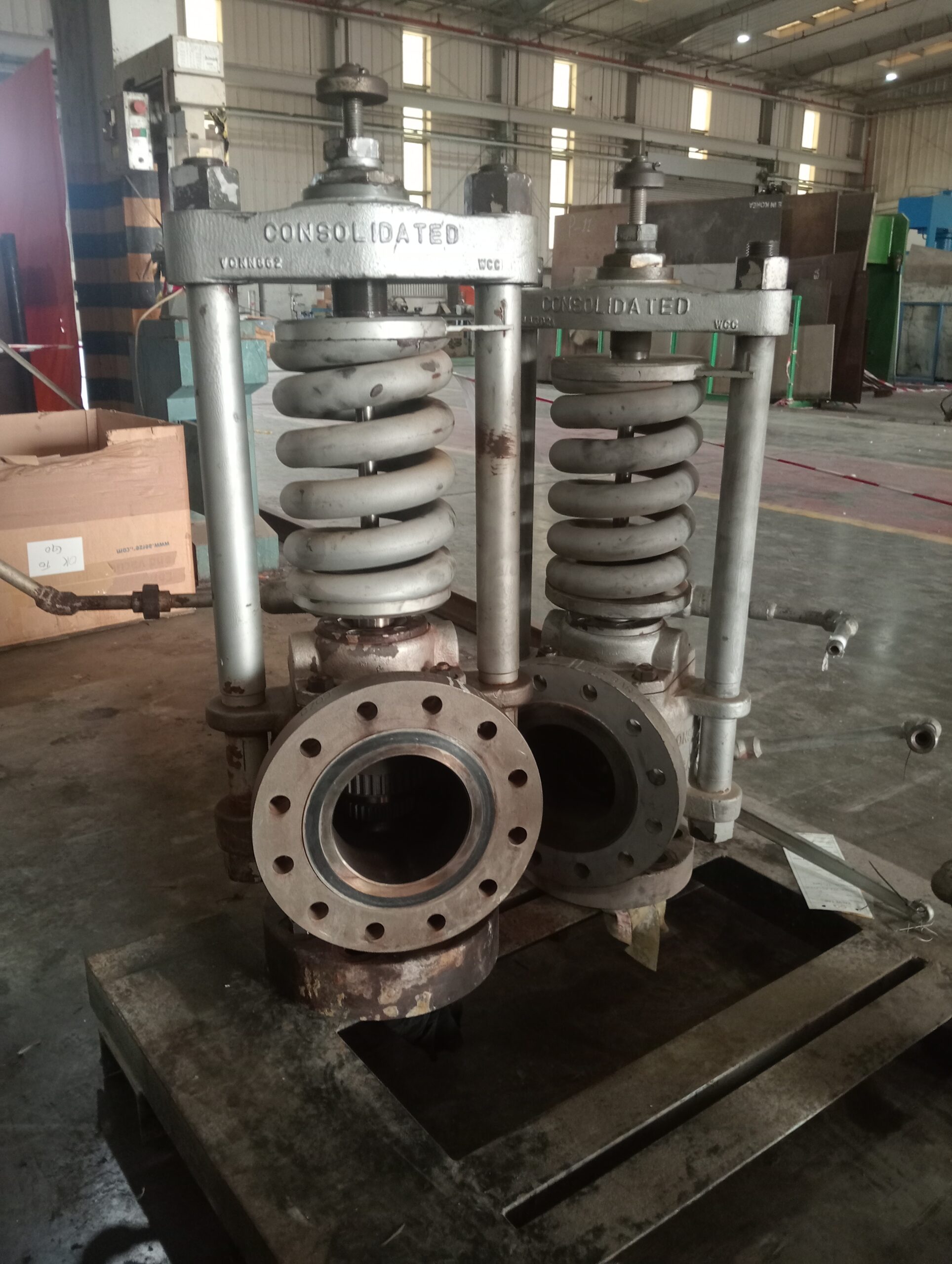
Safety valve is a type of valve which is used in a pipeline, vessel or in a system to release excess pressure. Also provide safety to plants, the environment, and people by releasing pressure.
What is a safety valve?
Safety valve is a type of valve which is used in a pipeline, vessel or in a system to release excess pressure. Also provide safety to plants, the environment, and people by releasing pressure.
Why is the safety valve used?
Because the safety valve has a mechanism to automatically open the valve when the valve pressure reaches a set point.
Types of safety valves?
There are three types of safety valve are:
- PSV (pressure safety valve)
- PRV (pressure relief valve)
- Pilot operated safety valve
What is a Bellow type safety valve?
Below is designed like a metal barrier, below prevents all the toxic or non toxic fluids from going inside the bonnet.
Because if the fluids go inside the bonnet then it will come through by vent, and also damage all the parts inside the bonnet like spring, spring washer, spindle.
What is an open bonnet safety valve?
Open bonnet PSV is a conventional type PSV, which is mostly used in a steam line, to protect from the over temperature inside the bonnet.
What is a blowdown?
I’m going to tell you about blowdown, so the blowdown is the difference between set pressure (when valve pop up) and reset pressure (when valve closed).
it means between set pressure & reset pressure how much pressure decrease is called blowdown.
For example valve set pressure is 10 bar, and valve reset at 9 bar so the blowdown is 1 bar. If I say in percentage then the blowdown is 10% and reset pressure is 90%.
What is reseat pressure?
When the disc get contacted with seat after pop up is reset pressure. For example set pressure is 10 bar and valve reset is 9.5 bar after pop up then the reset is 9.5 bar = 95% reset pressure.
What is CDTP?
CDTP (cold differential test pressure) is the adjusted pressure which is used to test a PSV on a ventil test bench.
Why CDTP?
- We use CDTP because the actual set pressure changes when the valve is installed in a hot line (temperature effect).
- CDTP = Corrected pressure so that PSV opens at the right pressure in real conditions, not bench conditions.
- When testing at room temperature and without backpressure, it is necessary to adjust the set pressure to compensate for these factors.
How to repair a safety valve?
First of all I’ll check the data sheet or name plate which is available on the valve body, and put the valve on ventil test bench for pretest, after pretest if the supervisor will say me hisamuddin you have yo do repairing of this PSV,
Then l’ll do hydrojetting with that valve because there can be harmful gas or, chemical inside the valve body we don’t know, so first I’ll do hydrojetting.
After hydrojetting I’ll put the valve on vice and do making, and remove the cap, then I’ll do a most important thing called measuring, I’ll take measurement of tension bolt or adjusting screw from vernier caliper.
Then I’ll loose the lock nut and loose the tension bolt. Loose body bonnet joint, remove upper spring washer, spring, lover spring washer, spindle, remove guide bushing, remove disc holder, remove disc from disc holder, loose nozzle ring Adjusting bolt, remove nozzle ring, if the valve size is smaller then I’ll dismantle nozzle too, I’ll do this so that I can do lapping properly.
Then I’ll check all the parts condition, like spring, spindle, disc holder, spring, nozzle disc and everything, if there is possibility to replace some parts then I’ll inform my supervisor or to my senior. If all the parts are okay then I’ll do cleaning, and most important thing I’ll do lapping of nozzle and disc.
After cleaning and lapping I’ll assembled the valve same as before, and send it to for final test.
How to test a safety valve?
First we have to check all the details which has mentioned on the name plate, and match with datasheet, then after that put the valve on ventil test bench and follow API (American Petroleum Institute) 527 for pop up test, and for seat tightness test follow ASME (American Society of Mechanical Engineers) Section VIII.
How to check back pressure?
Choose a flange on the basis of valve size & valve rating, then put the flange on the outlet side then give the pressure and see the leakage by using a soft solution.
How to check bubbles?
Put the flange on the outlet side then after give the pressure on the basis of how much pressure is need then count the bubble.
How to check bubbles in open bonnet PSV?
Put half flange or grey tape on the outlet side and put water also and then count the bubble.
Difference between PRV & PSV?
PSV (pressure safety valve)
- PSV use in compressible fluids, like steam, vapour, Gas.
- PSV open suddenly when pressure reaches a set point.
- PSV fluids material goes waste.
PRV (Pressure Relief valve)
- PRV use in non compressible fluids, like water, oil, any type of liquid.
- PRV open gradually according when pressure reaches a set point.
- PRV fluids send to back to the system.
Parts name of PSV & PRV?
There are multiple parts in pressure safety valve and pressure relief valve.
Lever handle, (Lever use to operate the valve manually) Cap nut & bolt, (in some safety valves the cap is threaded). Adjusting bolt, Lock nut, Bonnet, Upper spring washer, Lower spring washer, Spindle, Guide with bushing, Disc holder, Disc, Nozzle, Nozzle ring, Nozzle ring adjuster bolt, Body
What is the test tolerance of PSV & PRV?
Sir According to the API Standard 527 (American Petroleum Institute) pop up tolerance is + & – 3% and seat tightness under 90%.
How to test bellows?
For below testing, I’ll pour the water inside the bellows and see the leakage.
No responses yet